Why Regulation Begins in the Body, Not Behavior
Aug 06, 2026Why Regulation Begins in the Body, Not in Behavior
Why Body-Based Regulation Matters for Every Child—Especially Neurodiverse Children
For decades, we’ve focused on changing children’s behavior.
We’ve used reward charts, consequences, time-outs, sticker systems, and endless reminders.
While these approaches may change behavior temporarily, they often miss something much deeper.
Behavior is the outcome—not the starting point.
Before a child can pay attention, solve problems, communicate effectively, or manage emotions, the nervous system must first feel safe enough to access those abilities.
This is why regulation begins in the body.
The Nervous System Is Always Listening
Every second of every day, our nervous system asks one question:
Am I safe?
This happens automatically, below conscious awareness. Dr. Stephen Porges calls this process neuroception—the nervous system’s ability to detect safety or danger without us thinking about it.
When the body perceives safety, children can:
- Learn
- Explore
- Connect with others
- Think creatively
- Solve problems
- Regulate emotions
When the body perceives danger—even when no real danger exists—the nervous system shifts into protection.
That protection might look like:
- Fidgeting
- Meltdowns
- Aggression
- Withdrawal
- Constant movement
- Difficulty focusing
- Perfectionism
- Anxiety
- Shutting down
These behaviors aren’t signs of a “bad” child.
They’re signs of a nervous system doing exactly what it was designed to do: protect.
The Body Tells the Story
Long before children have the words to explain how they feel, their bodies tell the story.
You may notice:
- Shallow breathing
- Breath holding
- Tight shoulders
- Poor posture
- Constant movement
- Difficulty sitting upright
- Limited body awareness
- Avoidance of movement or touch
- Clumsiness
- Trouble with balance and coordination
These aren’t simply movement issues.
They’re clues to how the nervous system is organizing itself.
Every movement pattern has a story.
Why This Matters for Neurodiverse Children
For autistic children, children with ADHD, sensory processing differences, and other neurodiverse learners, the nervous system often processes the world differently.
Sounds, lights, touch, movement, transitions, or unexpected changes may be experienced more intensely.
Their nervous systems are not “wrong.”
They’re working hard to process an overwhelming amount of information.
When we only focus on behavior, we may overlook what the body is communicating.
Instead of asking:
“How do I stop this behavior?”
We can begin asking:
“What does this nervous system need right now?”
That simple shift changes everything.
Rather than trying to control behavior, we create conditions where regulation becomes possible.
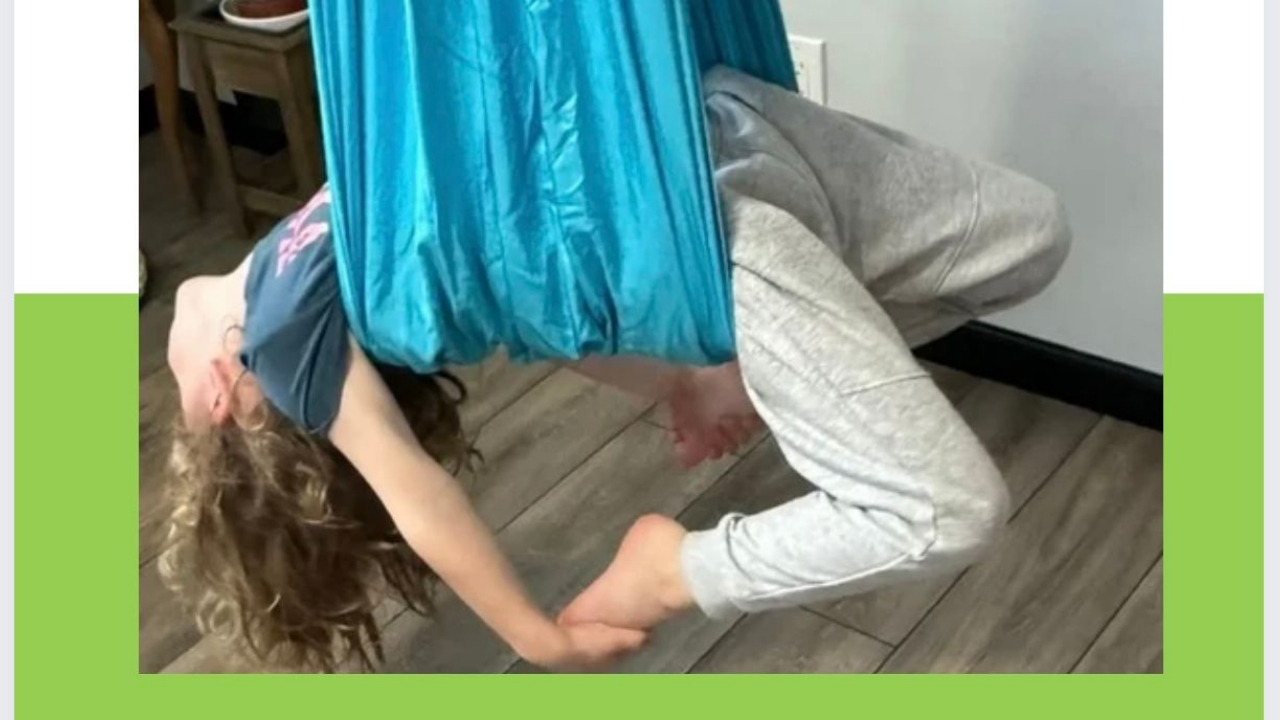
Movement Changes the Nervous System
Movement is one of the fastest ways to influence nervous system state.
Thoughtful, intentional movement provides the brain with information that supports organization, balance, and regulation.
Movement can:
- Increase body awareness
- Improve attention
- Support emotional regulation
- Organize the vestibular and proprioceptive systems
- Improve coordination
- Build confidence
- Support breathing
- Reduce stress
Movement isn’t simply exercise.
It’s information.
The nervous system is constantly gathering information from muscles, joints, breath, vision, balance, and the environment to decide whether the body is safe.
Breath Is More Powerful Than We Realize
Breathing is one of the few functions that is both automatic and voluntary.
When stress becomes chronic, breathing often becomes shallow, rapid, or held without us even realizing it.
I’ve seen children—and adults—hold their breath while concentrating, walking into new situations, or becoming overwhelmed.
The breath tells us how the nervous system is coping.
Gentle breathing practices aren’t about forcing relaxation.
They’re about helping the nervous system experience safety one breath at a time.
Adults Go First
Children borrow our nervous systems before they build their own regulation skills.
If we are rushed, tense, overwhelmed, or constantly operating in survival mode, children sense it.
Our nervous systems communicate far more than our words.
Co-regulation happens through presence.
Through our breathing.
Through our movement.
Through our facial expressions.
Through our voice.
Before we ask children to regulate, we must first learn to regulate ourselves.
What This Looks Like at Move Into Calm
At Move Into Calm, we don’t begin by asking,
“What’s wrong with this child?”
We ask,
“What does this nervous system need to feel safe?”
Through movement, breath, body awareness, and connection, children begin to experience something many have been missing:
Safety.
As safety increases, we often see:
- Better focus
- Easier transitions
- Improved body awareness
- Increased confidence
- More flexible thinking
- Better emotional regulation
- Stronger relationships
- Greater readiness for learning
These changes don’t happen because children are forced to behave differently.
They happen because their nervous systems no longer need to stay in protection.
Final Thoughts
The more we understand the nervous system, the more compassion we bring to the children in our lives.
Behavior is important.
But behavior is not the first place to look.
The body comes first.
When we support the body, we support the nervous system.
When we support the nervous system, regulation becomes possible.
And when regulation becomes possible, learning, relationships, and resilience naturally follow.
At Move Into Calm, we believe regulation begins in the body—not in behavior. Because when the body feels safe, everything changes.
Unlock Peace and Connection: With an interactive eBook,
Move into Calm 5 Minute tools to Help your Child and You Reset
Stay connected with news and updates!
Join our mailing list to receive the latest news and updates from our team.
Don't worry, your information will not be shared.
We hate SPAM. We will never sell your information, for any reason.