Bring Nervous System Regulation Into Your School
Regulated Classrooms Begin With Regulated Adults
The nervous system always leads.
Before children can focus, connect, problem-solve, transition, or learn, their nervous systems need enough safety and regulation to access those skills.
And the adults around them matter.
A regulated adult helps create the conditions for a regulated child.
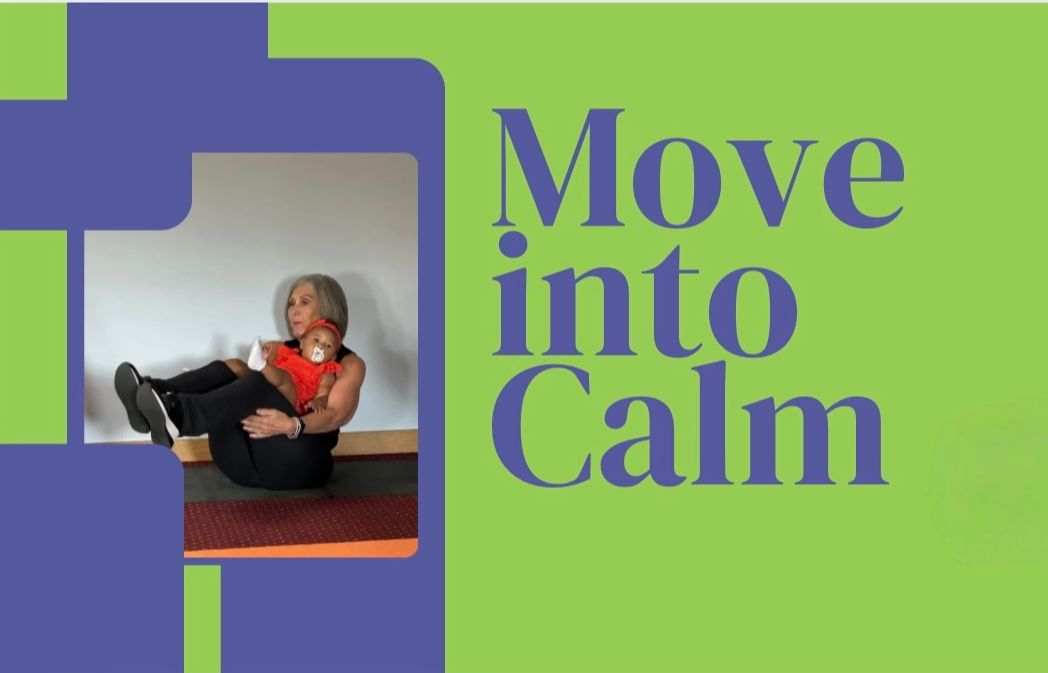
Move Into Calm supports schools and educators in understanding the nervous system from the body up—bringing practical, neuroscience-informed tools into everyday educational environments.
Schedule a callSupporting Mental Health From the Body Up
Mental health is not separate from the nervous system.
Stress, overwhelm, sensory overload, fatigue, and dysregulation can influence how both children and adults think, feel, connect, and respond throughout the school day.
When the nervous system is under stress, access to attention, language, executive functioning, emotional regulation, and learning can become more difficult.
Move Into Calm helps educators build greater nervous system awareness and gives them practical ways to support regulation through:
- Movement
- Breath
- Sensory awareness
- Co-regulation
- Body-based strategies
- Connection and relationship
The goal is not to keep everyone calm all the time.
It is to build the capacity to recognize nervous system states, respond with greater understanding, and return to regulation again and again.
Adults Go First
Educators carry tremendous responsibility.
They support children with increasingly complex emotional, sensory, behavioral, and developmental needs while also managing classroom demands and their own stress.
That is why Move Into Calm begins with the adults.
When educators understand what is happening within their own nervous systems, they are better able to recognize what may be happening within the children they support.
A more regulated adult nervous system can help create greater:
Emotional safety
Connection
Trust
Engagement
Flexibility
Readiness for learning
Because regulation is not something we simply ask children to do.
It is something we help build with them.
Bridging Neuroscience and Everyday Educational Practice
Many schools are already doing important work around trauma-informed care, social-emotional learning, mental health, and student well-being.
Move Into Calm helps bridge the gap between that knowledge and what educators can actually do in the moment.
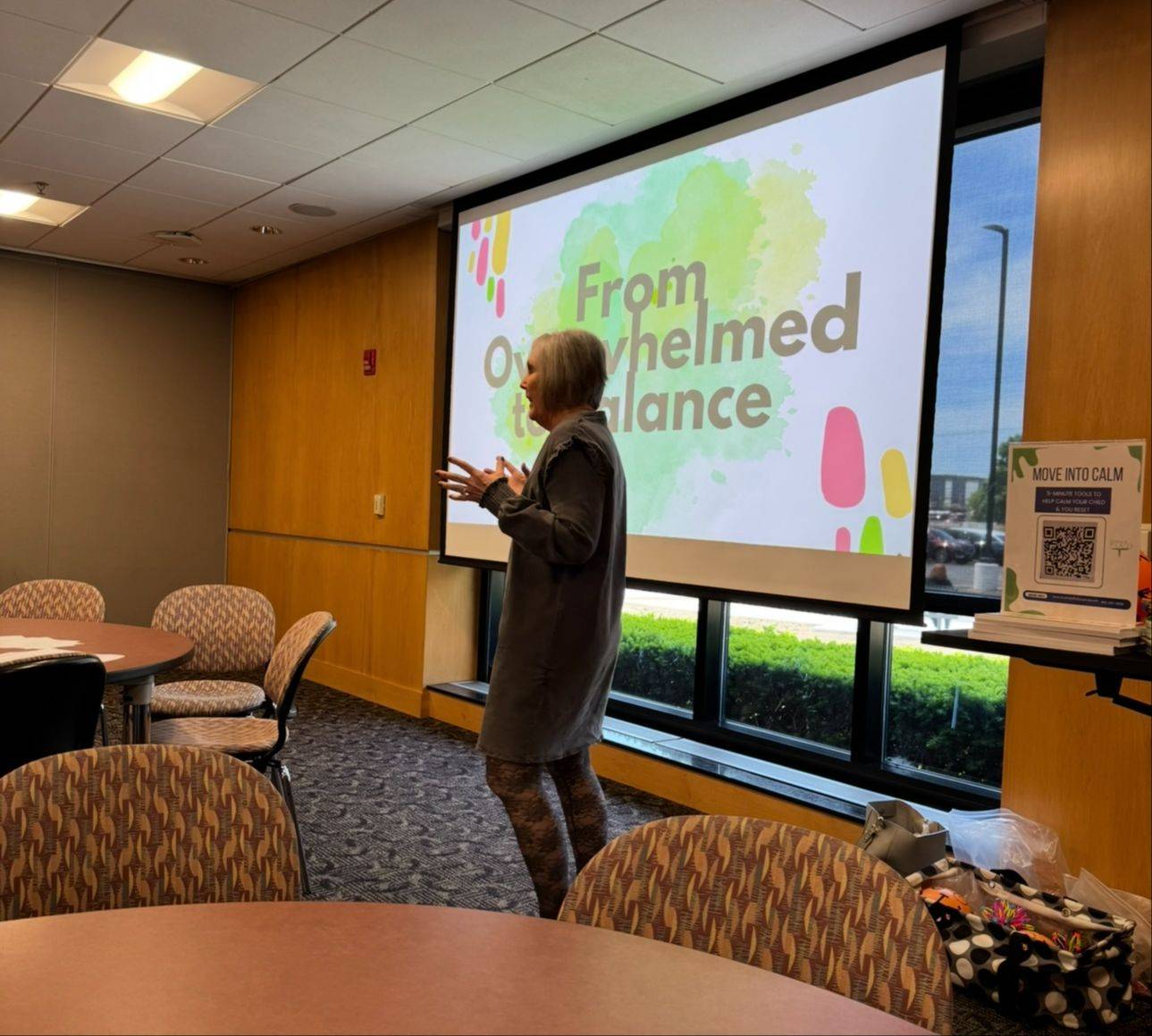
Educators learn how the nervous system influences attention, movement, emotional capacity, connection, and learning—and how simple body-based strategies can help support a shift in state.
This is where neuroscience becomes practical.
Not another program to fit into an already full day.
Tools that can be woven into what educators are already doing.
Biology Before Behavior
Behavior gives us information.
Rather than looking only at what a child is doing, nervous system awareness invites us to become curious about what may be happening underneath.
What state is the nervous system in?
What is the body communicating?
What support might help this child access greater regulation and connection?
This shift moves us from simply managing behavior toward understanding the biology beneath it.
Biology before behavior.
Connection before correction.
Safety before strategy.
Regulation before expectation.
Practical Tools That Support the School Day
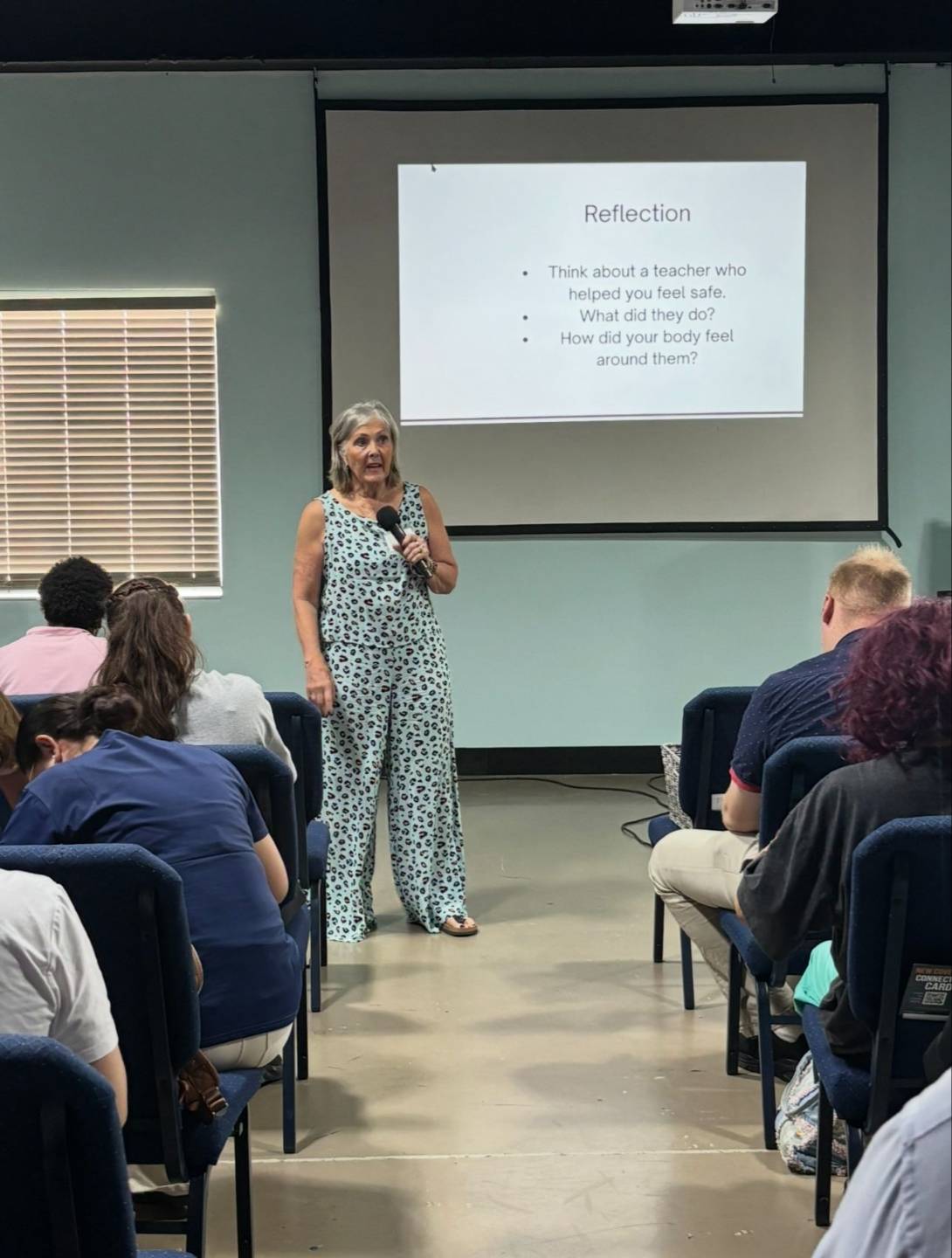
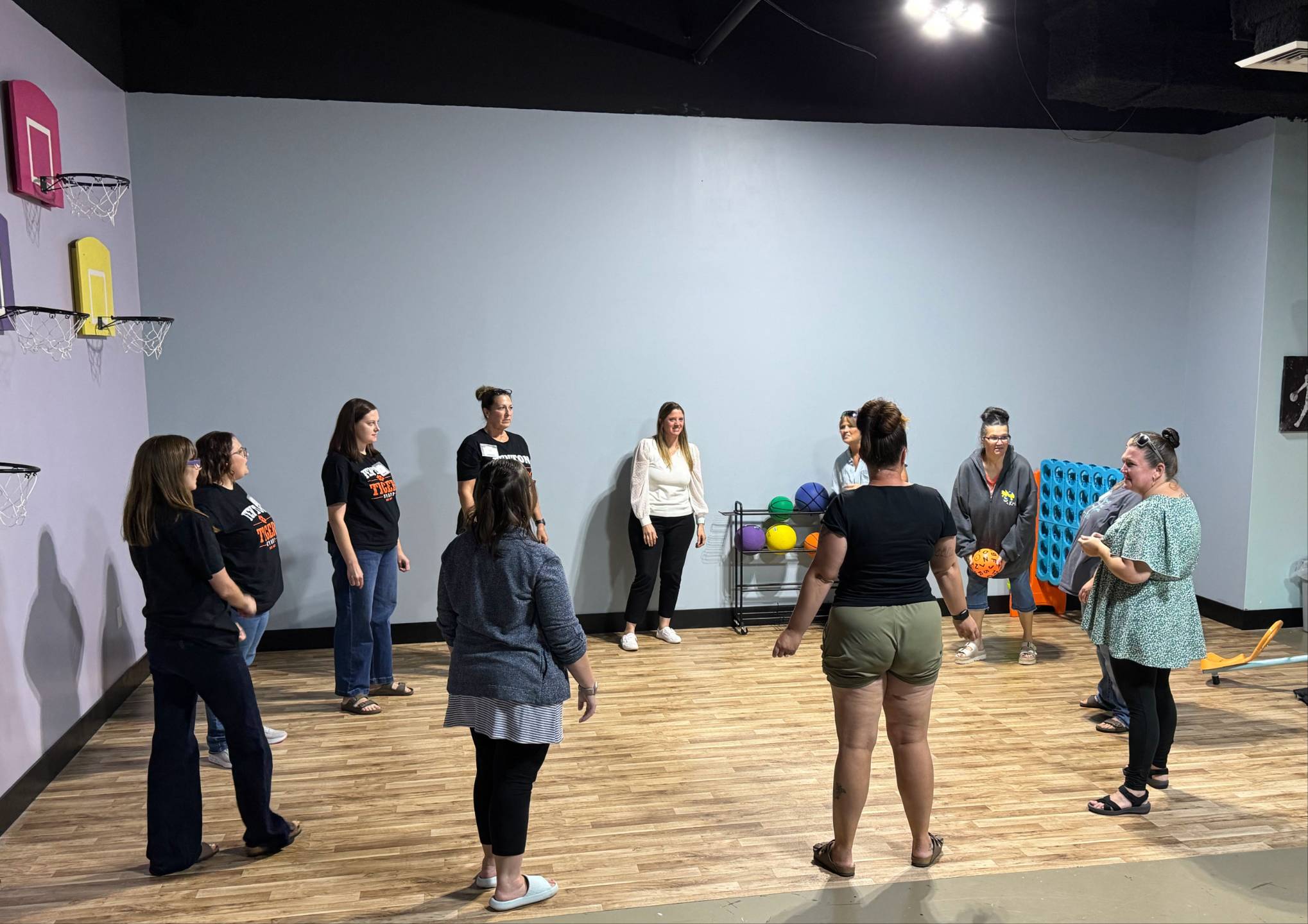
Move Into Calm workshops are experiential.
Educators learn through their own bodies so they can better understand how regulation feels—not just what it means.
Strategies may include breath, grounding, cross-body movement, proprioceptive input, rhythmic movement, sensory awareness, and simple regulation practices that can be used throughout the school day.
These tools can support transitions, attention, connection, emotional capacity, and readiness for learning.
Creating Better Conditions for Learning
When both adults and children are dysregulated, learning and connection become much more difficult.
When nervous systems have greater access to regulation, we create better conditions for:
- Engagement and time on task
- Stronger relationships
- Trust and emotional safety
- Greater flexibility
- Classroom connection
- Learning and academic growth
- Adult and student well-being
Move Into Calm is not about creating perfectly calm classrooms.
It is about creating classrooms where adults and children have a greater understanding of their nervous systems and more tools to return to regulation when stress shows up.
Bring Move Into Calm to Your School
Move Into Calm offers professional development, in-service training, workshops, and customized programming for schools, early childhood programs, educators, support staff, and organizations.
If your school is looking for a practical, body-based approach to nervous system regulation, educator well-being, mental health, connection, and learning, I would love to start a conversation.
When nervous systems feel supported, connection grows—and learning can thrive.
Schedule a Conversation
Schedule a call